Finally, here it is, the promotional site and "book trailer" for Aaron Cohen's SlaveHunter.
Aug 31, 2009

Aug 30, 2009
Floating Beer Pong table

We'll be taking orders soon.
The next designs will also allow for Floating Flip Cup and Quarters.
Aug 26, 2009
Top 15, pt. 2
6) Rushmore
The most accurate depiction of teenagehood/high school ever. I was never a fan of The Breakfast Club because though it did quantify amazingly the stereotypes of teenagers that have always existed, it didn't *respected* being a teenager as Rushmore did.
7)Fight Club
*sigh*
8)Following/Primer
Following is Christopher Nolan's first film and was produced for less than $40,000. Nolan had never made a feature film, and none of his actors were professional: all scenes were shot in a few hours on weekends over a nine month period. Locations were the actor's or parents' apartments. There was rarely more than one take for any scene. But the story was still incredible. Same with Primer, which cost around $7,000. If you're smart, you really don't need much at all to make a great film.*
9)Amelie
This was the first film I saw to really showcase the love of a city.
10)The Blair Witch Project
I'm not really crazy about the film. But that doesn't matter. Because it wasn't really about the "film," it was about using the internet to tell the story with the film. The film was made to accompany the site, not the other way around.
*My favorite anecdote of no-budget filmmaking: Monty Python's Holy Grail. The group had such a small budget they couldn't rent horses. The coconut gag was written as an excuse for lack of money, and was the funniest joke of the whole film.
The most accurate depiction of teenagehood/high school ever. I was never a fan of The Breakfast Club because though it did quantify amazingly the stereotypes of teenagers that have always existed, it didn't *respected* being a teenager as Rushmore did.
7)Fight Club
*sigh*
8)Following/Primer
Following is Christopher Nolan's first film and was produced for less than $40,000. Nolan had never made a feature film, and none of his actors were professional: all scenes were shot in a few hours on weekends over a nine month period. Locations were the actor's or parents' apartments. There was rarely more than one take for any scene. But the story was still incredible. Same with Primer, which cost around $7,000. If you're smart, you really don't need much at all to make a great film.*
9)Amelie
This was the first film I saw to really showcase the love of a city.
10)The Blair Witch Project
I'm not really crazy about the film. But that doesn't matter. Because it wasn't really about the "film," it was about using the internet to tell the story with the film. The film was made to accompany the site, not the other way around.
*My favorite anecdote of no-budget filmmaking: Monty Python's Holy Grail. The group had such a small budget they couldn't rent horses. The coconut gag was written as an excuse for lack of money, and was the funniest joke of the whole film.
Aug 25, 2009
Top 15, pt. 1
My friend posted up a list on facebook of his top 15 favorite movies, so I quickly put down a list in no order. I'll try not to go too in-depth about why they're there, but some should be noted.
1) The Insider
One of my top 3 favorite films. I put this down instantly. The story is perfect. The acting is perfect. The photography is flawless. The music is incredible. Of all the films I'll list here, this is the kind of movie I'd most want to make.
2) Brazil
The second of my top 3 favorite films. We've grown up seeing how movies are made. Without obviously going through the process of making films, we know generally how films move from screenplay to production, how sets are built and basically how most visual effects are accomplished. Brazil was completely beyond my comprehension. I simply had no idea *how* the film was made. How had Gilliam created such an epic, complete and massive world? If I had ever thought about being a filmmaker before, this was the film that ultimately pushed me in that direction.
3) Irreversible
Yep, it's on the list. For a long while, this was The Movie That Shall Not Be Named for fear that my friends would rent it thinking I recommended it (as the case with Eraserhead [I love Eraserhead, but it's clearly not for everyone). Irreversible is on the list because it completely altered the way I look at sound. Every single film ever made always uses imagery to drive the narrative and sound accompanies the imagery; this did the opposite: the sound *drove* the story and the picture helped drive the overall sound composition. Likewise I had seen films that played with long-form shots and chaotic movements, but this was the first film where it took a life of its own. The camerawork became its own character and felt justified to the telling of the story.
4) Rejected
The hardest I've ever laughed in a theatre before and since. Brilliant for so many reasons.
5) Perfume: The Story of a Murderer
A new one. Almost too new that I hesitate putting it on the list. But I really liked the film: a CSI-flavored Victorian period-piece that's very, very dark. But why on the list? Movies are horribly predictable. Most you can nearly set your watch to. And though most films have their twists and surprising directions or gags, you can usually predict where things will go in the first 15 minutes if the trailer didn't give too much away already. I never could have predicted where Perfume would end. Ever. Ever. For that alone, I respect the film deeply.
1) The Insider
One of my top 3 favorite films. I put this down instantly. The story is perfect. The acting is perfect. The photography is flawless. The music is incredible. Of all the films I'll list here, this is the kind of movie I'd most want to make.
2) Brazil
The second of my top 3 favorite films. We've grown up seeing how movies are made. Without obviously going through the process of making films, we know generally how films move from screenplay to production, how sets are built and basically how most visual effects are accomplished. Brazil was completely beyond my comprehension. I simply had no idea *how* the film was made. How had Gilliam created such an epic, complete and massive world? If I had ever thought about being a filmmaker before, this was the film that ultimately pushed me in that direction.
3) Irreversible
Yep, it's on the list. For a long while, this was The Movie That Shall Not Be Named for fear that my friends would rent it thinking I recommended it (as the case with Eraserhead [I love Eraserhead, but it's clearly not for everyone). Irreversible is on the list because it completely altered the way I look at sound. Every single film ever made always uses imagery to drive the narrative and sound accompanies the imagery; this did the opposite: the sound *drove* the story and the picture helped drive the overall sound composition. Likewise I had seen films that played with long-form shots and chaotic movements, but this was the first film where it took a life of its own. The camerawork became its own character and felt justified to the telling of the story.
4) Rejected
The hardest I've ever laughed in a theatre before and since. Brilliant for so many reasons.
5) Perfume: The Story of a Murderer
A new one. Almost too new that I hesitate putting it on the list. But I really liked the film: a CSI-flavored Victorian period-piece that's very, very dark. But why on the list? Movies are horribly predictable. Most you can nearly set your watch to. And though most films have their twists and surprising directions or gags, you can usually predict where things will go in the first 15 minutes if the trailer didn't give too much away already. I never could have predicted where Perfume would end. Ever. Ever. For that alone, I respect the film deeply.
Aug 24, 2009
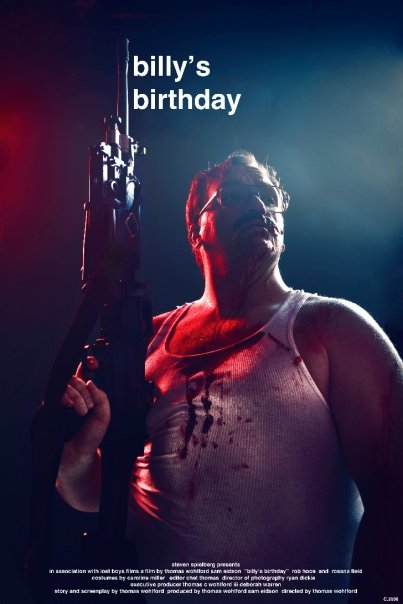
billy's birthday
Billy's Birthday [Trailer] from Thomas on Vimeo.
In my last year SCAD, my friend Thomas made his thesis film Billy's Birthday, which ended up taking a lot longer to complete than he thought. It's finished now, under the "War Room Collective" production company, and will be touring film festivals soon.
It's awesome. I'm really looking forward to it.
Aug 20, 2009
Imagining the Future of YouTube
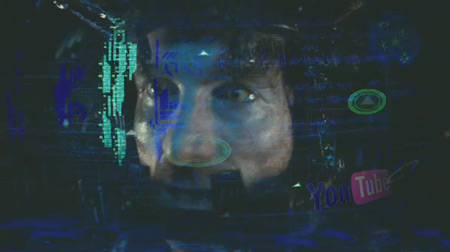
YouTube wrote up a blog post about imagining what the future of YouTube will be. I say thought it was kind of odd, mostly because obviously the article doesn't really *say* anything, just mentions that they're looking into the options of the future and how they can plant video into every aspect of our lives.
YT's done a lot in in four years. A whole lot. A huge, massive, impossible lot. Really, all online video. Prior to streaming/embeddable video, the only real players in the game were ebaumsworld and P2P apps. I remember when I first saw YT, it was when MySpace was starting to really surge in popularity, and through YT you could embed the video. A lot of other portals would allow you to upload content for free, but you could only check it out on their site, and it was meager at best. YT was meager as well, but shareable. And it exploded.
Now of course YT's going to be mum on their next plans. They're facing as much competition as ever and even though they have the most powerful stronghold on video by a considerable sum, it won't take much to knock them down (the magic words "income" with comparison to Hulu comes to mind). But where do they have left to go? There's a few options.
1) Saturation
YT is 90% computer, 9% mobile, 1% other (including TV)* (*not at all a real statistic). YT is still designed for the computer. That's not necessarily a bad thing, Nike's bread and butter still comes from shoe manufacturing. But where their community excels on the computer, their service needs to exist everywhere else. Video on the business front is still very private: gas stations control video ads at pumps, airports choose select cable channels, etc. Where's those promises of bank ATM's offering ads and trailers (which I still think is an awful idea) or screens on public transportation? Those are selected and implemented by private businesses. YT could rip out the carpet from under the feet by impelementing stronger AdSense/Analytics into these variable offerings. Google's still king on those fronts of hyper-efficiency, their service would be phenomenal to the business. This is another reason why I think YT bought On2 compressor technology: compressing video to the best quality from the appropriate devices.
2) Action
Everyone followed suit with YT when they released annotations and notes onscreen. YT went sluggish with banner ads to other services. Annotations are awesome, but they're still limited to linking between videos. Mostly, this is all that's necessary, but they could have so much more power if they did more. Take, for example, BooneOakley who built their entire site brilliantly through YouTube videos:
YT needs to assist businesses and artists that continue innovation like this. All BooneOakley's traffic goes to YT, not affiliated traffic.
3) Make "Video" not "Video"
What happens when HTML5 supports Theora natively? You change how video interacts with the site dynamically.
This still makes "video" into a rectangular window, but it's essentially like flash-capability without flash. The bad news means that annoying video-based banner ads will load much faster. The good news means that you won't need to "embed" anything into a page to interact with it, in terms of video.
One thing I absolutely loved in the film Starship Troopers (which I hold dear to my heart) was their PSA interludes that would have a news story and each would end with "Would You Like To Know More?" and either another story came on or there was a click that had put you more in-depth with the story. That would be the capability, on-the-fly, along with written words, actions or whatever else.
So where is YT going in the next 5 years? Probably all three. No doubt much more. Again, we started with embedding poor-quality video, and now we're able to annotate, act, advertise, analyze, reply via video, directly upload via most mobile devices, HD, 3D... the list goes on and on. Remember, Google employs some of the smartest people in the world, far smarter than me, so I'm certain these have all been in the pipeline for the last few months.
Aug 19, 2009
Uncle Dick's 85th
Created with Admarket's flickrSLiDR.
I went home this weekend to celebrate my Grandfather's 85th birthday.
I still need to learn how to better color-process RAW files.
Aug 14, 2009
Touchscreen
When I was around 10, I went to a piano summer school at Cal State Long Beach for a few weeks, and got to visit the Yamaha music factory. They showed us a few toys (MIDI boxes were big then), but the coolest thing at the time was wearable sensors that created music based on motion. Stepping in place, outstretching your arm, swinging your hand all made different sounds. You looked like a cross between XMen 2099's Metalhead and a one-man band. We had a lot of fun, but I never saw it outside of the factory.
Most all of that technology is obsolete now, in favor of multi-gestural interfaces (iPhone), augmented reality gestures (Project Natal), or spatial-operation (g-speak, ala Minority Report), and I find it absolutely fascinating that the more advanced we get, the more digital interaction comes down to primal, natural gestures that basically moves us backward to our original cognitive roots.
But obviously Calvin Harris wasn't going for breakthrough technology, he was making a gimmick that brought a visual performance to his music. In fact, telling by his enthusiasm, he couldn't care less what he was painted on to who, so long as his new album was getting attention. But that's not a bad thing. Because the fall of Yamaha's Miburi was not caused from lack of development, but lack of relevance. Yamaha only pitched the device to manufacturers and major brands instead of artists who could develop it to something different. Likewise Harris' rubber paint in and of itself is nothing of real value, but in new context creates a really engaging piece.
Now if only Yamaha had thought to put their models in bikinis 20 years ago..
Aug 10, 2009
Raisin Bran and Cholula
I'll be writing a more in-depth article about this on the Causecast blog.
Somehow.
Aug 6, 2009
John Hughes
My professor at SCAD produced "The Breakfast Club," and told us the story of how he met John Hughes.
Hughes had submitted the script for what would be "National Lampoon's Vacation," and Meyer flew out to finalize the contract. Hughes worked at an advertising agency, and when he met with the producers, he mentioned that he had a few other scripts. He wanted to direct eventually, but knew that likely no one would give him much money on the first film, so the story took place in one room: "The Breakfast Club." Meyer was really impressed with and acknowledged how intuitive the man was. Then Hughes showed off his other scripts: all the movies he would eventually direct in the 1980's he had already mapped out before the start of his career.
Hughes had submitted the script for what would be "National Lampoon's Vacation," and Meyer flew out to finalize the contract. Hughes worked at an advertising agency, and when he met with the producers, he mentioned that he had a few other scripts. He wanted to direct eventually, but knew that likely no one would give him much money on the first film, so the story took place in one room: "The Breakfast Club." Meyer was really impressed with and acknowledged how intuitive the man was. Then Hughes showed off his other scripts: all the movies he would eventually direct in the 1980's he had already mapped out before the start of his career.
Google and On2: wolf in sheep's clothing

(from YouTube's Blog, Video Quality Goes Up, Up, Up, 21 July 2009)
Yesterday Google announced that it will be acquiring On2 Technologies in a stock-for-stock transaction, valuing at $106.5 million. On2 is one of the leading developers of video codecs: purely behind-the-scenes work that makes online video streaming possible. They hold a number of patents and have worked with Adobe, Nokia, Sony and more. Big stuff.
Google is Google. They acquired YouTube a few years ago and YT stands as the premiere delivery of online video all over the world. It makes sense that they would be working with On2, especially when the details of HTML5 have been hashed out and now Google's stepping more and more into various media delivery packages with Android and Chrome OS (whatever that's going to be).
Now there's two ways to look at this. I'd prefer to look at this optimistically because I love all-things Google. YT currently delivers 4 packages of video quality: High Definition (1280x720), High Quality (480x360), Standard Quality (320x240), and Mobile (176x144). They're wonderful. I wish my iPhone would be able to stream SD or HQ through the YT app over mobile (which is curbed to the lowest-common denominator), but I'll accept that casualty in how easy it is to download the original-quality upload to your computer. So in that case, the acquisition of On2 means that they're still evolving their codecs to deliver great quality video over lower bandwidth; helping them, helping us. They have the four qualities established now, but they recognize there's still work to be done and they've joined teams with one of the best.
But there's a pessimistic view that I haven't found many people noticing. YouTube still doesn't make money. Google's very open that they lose a lot every year (in fact, I'm thinking too open, but that's a conspiracy I have no grounds on whatsoever) in supplying the storage and bandwidth to deliver nearly 24hrs of video uploaded every minute. From the beginning they've been building their own glass ceiling to the likes of Hulu, which from their beginning have had the strongest business model comparatively (although that's apparently under argument as well). YT has tried to combat this by giving an outlet to major movie and tv studios for streaming just like Hulu. But how many of you have watched a whole film on YT and how many have watched on Hulu? No contest.
The other argument is that this has been another Double-Click acquisition in disguise. When a production studio wants to stream their content at the best quality for the lowest overhead themselves, they would independently go to On2 (WB and Sony, for example, are listed on the site's frontpage). Now it's YT. Say Hulu wants to go back into the code for their compression algorithms to improve efficiency, they'll have to do all the legwork themselves over licensing On2's research. Likewise any other video player: MySpace, Facebook, Blip, etc. Google isn't taking the monopolistic hand by absorbing all competition, just the best. And it becomes a real gray area when it's just a matter of code that anyone is free to play with (Theora, for example, is what everyone has their eye on now hoping that Google will expand and push).
But again, I love all things Google. I've been using all things Google for the past 3 years and don't plan on slowing down. But lately I've been worried that the tower they've been building upward has been using the bricks from the bottom floor. We use YT heavily at Causecast in combination with our own custom video player, and I would love to have our viewers see the best quality video come out of our pipeline.
Google, if you aren't evil and we should trust you, can you please check again on your mobile compression?
Aug 2, 2009
I'll Kill Her
I've been watching a lot of animation videos, catching up on Motionographer, and I think this was the one to cap off the weekend.
Student-made music video for Soko's "I'll Kill Her" (which I really like) by Joerg Barton, and he said he used "Cinema 4d for 3d modeling and 3d Animation, Xfrog (as Cinema 4d plugin) for modeling and animating the plants and ornamental shapes and After Effects for 2d Animation and compositing."
I'll probably save this for another post, but there's a few films that I list in my top 5 not because I love watching them, but because their execution was completely beyond my comprehension. This was a very expertly-made video with a lot of care put in, but like those films in the Top 5, I simply cannot picture how you would make it happen.
Or maybe I'm just not paying enough attention to other, non-AE programs like Cinema 4D.
I´ll kill her from Joerg Barton on Vimeo.
Student-made music video for Soko's "I'll Kill Her" (which I really like) by Joerg Barton, and he said he used "Cinema 4d for 3d modeling and 3d Animation, Xfrog (as Cinema 4d plugin) for modeling and animating the plants and ornamental shapes and After Effects for 2d Animation and compositing."
I'll probably save this for another post, but there's a few films that I list in my top 5 not because I love watching them, but because their execution was completely beyond my comprehension. This was a very expertly-made video with a lot of care put in, but like those films in the Top 5, I simply cannot picture how you would make it happen.
Or maybe I'm just not paying enough attention to other, non-AE programs like Cinema 4D.
Clear Day
 Beautiful day in Santa Monica
- UPDATE -

Not bad. Especially for just $1.99.
color
My photo:

I should have known better than to check out Stu Maschwitz's Flickr when I just talked to a coworker about how I knew nothing about post-processing (Stu created Red Giant's Magic Bullet color-timing software).
Stu's photo:

I should have known better than to check out Stu Maschwitz's Flickr when I just talked to a coworker about how I knew nothing about post-processing (Stu created Red Giant's Magic Bullet color-timing software).
Stu's photo:
Aug 1, 2009
Scotty Iseri - You Can Do Anything!
I've been heavily addicted to Scotty Iseri's video blog, "Scotty Got An Office Job" (SGAOJ). The most incredible part is how much he was willing to put online: without naming the company or his profession specifically, Scotty made some very personal, very dangerous recordings for the sake of the show, including dancing in the office, answering viewer questions during meetings, and ultimately his termination.
I found him really late in the game, after Chris Anderson (author of "Free") tweeted about his video which made fun of Anderson's philosophy from the perspective of the small-time musician. I emailed Iseri to get the free download, and he checked out my twitter, because he talked about the Mother's Day video which I loved (reminded me of making my friend's proposal video in high school).
I should email him again.
Subscribe to:
Posts (Atom)